

Table of Contents
Navigating the Greek real estate market requires more than just falling in love with a view of the Acropolis; it demands a rigorous buy apartment in Athens checklist to protect your investment. Whether you are purchasing a pied-à-terre in Kolonaki, a high-yield rental in Koukaki, or securing your residency through real estate, foreign buyers face unique administrative and structural hurdles. Our team at Atalos Estate operates exclusively as a buyer’s agent in Greece, meaning our sole focus is protecting your capital and ensuring a seamless acquisition. Because Greek property laws and building standards differ significantly from those in the US, UK, and Northern Europe, conducting a meticulous legal and physical inspection is non-negotiable. This comprehensive guide breaks down exactly what you must verify—from title deeds and building permits to a room-by-room structural evaluation—before you sign a preliminary contract.
💡 Key Takeaways
- Legal Verification is Paramount: Always secure an Electronic Building ID and an Engineer’s Certificate to confirm there are no illegal extensions or zoning violations.
- Inspect the “Polykatoikia” (Building): Your apartment’s value is tied to the shared building’s condition; always check the roof, elevator history, and shared expense (kinochrista) reserves.
- Modernise Your Utilities: Many older Athenian apartments require complete plumbing and electrical overhauls; factor these costs into your initial buying checklist.
- Energy Efficiency Matters: A valid Energy Performance Certificate (EPC) is legally required for the transfer and dictates your future heating and cooling costs.
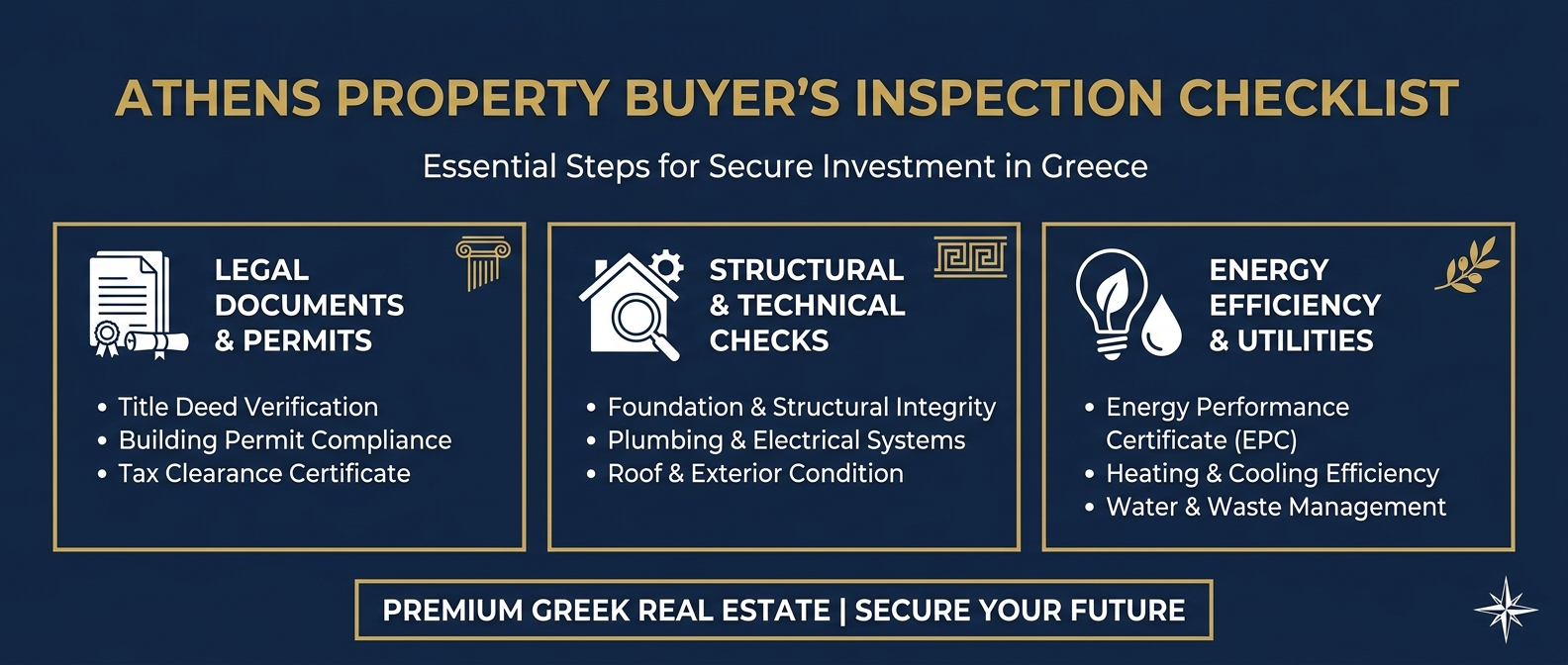
Why Do You Need a Comprehensive Buy Apartment in Athens Checklist?
A thorough checklist ensures you avoid hidden structural flaws, illegal extensions, and unresolved legal debts that commonly plague older Greek properties. Without a structured approach, international buyers risk inheriting costly liabilities that can delay renovations or invalidate Golden Visa applications.
In our experience representing global investors, the charm of a 1960s Athenian apartment often masks outdated infrastructure. A proper buying checklist bridges the gap between aesthetic appeal and structural reality. It forces buyers to look beyond the freshly painted walls and examine the core mechanics of the property. Furthermore, existing legal or planning irregularities can delay or even prevent a transfer, and may leave the buyer facing significant costs if they are not identified and resolved before completion. By systematically evaluating both the administrative paperwork and the physical condition of the unit, you safeguard your investment and gain crucial leverage during price negotiations.
🚀 Expert Insight
Many older apartments in Athens feature “semi-outdoor” spaces (imiypaithrioi) or balconies that were illegally enclosed by previous owners to create more interior space. If these spaces have not been legally regularised and the fines paid under Greek law, the property cannot be legally transferred. Our team always cross-references the actual floor plan with the registered municipal permits.
What Legal and Administrative Documents Must Be Checked?
You must verify the title deed, building permits, and the Energy Performance Certificate (EPC) before signing any preliminary contract. These documents form the legal foundation of your purchase and prove the seller has the absolute right to transfer the property.
When evaluating apartments for sale in Athens, the legal due diligence is just as critical as the physical inspection. The Greek state has recently digitised many property records, making the process more transparent but also stricter regarding compliance. Your legal team and appointed civil engineer must work in tandem to ensure every square metre of the property matches the official state registry. If you are new to the process, start with our complete guide to buying an apartment in Athens.
How to Verify Building Permits and Title Deeds?
Verifying building permits and title deeds requires a comprehensive search at the local Land Registry (Ypothikofilakeio) or the newer Hellenic Cadastre (Ktimatologio). This search confirms clear ownership, checks for outstanding mortgages or liens, and ensures the property’s physical footprint matches the approved municipal plans.
A critical component of any apartment inspection in Athens is the planning-compliance paperwork prepared by the seller’s engineer. Under current rules, the sale of an existing apartment generally requires the engineer’s certificate on unauthorised constructions and the Electronic Building ID (Ilektriki Taftotita Ktiriou; for an individual apartment, the identity of the divided property), both issued through the Technical Chamber of Greece (TEE) platform. These records cover the building permit, floor plans and any legalised arbitrary constructions. If this paperwork is missing or does not match the property, the transaction will stall at the notary, so have your own engineer review it before you commit. For the full process, see our guide on Greece property due diligence. We strongly advise international buyers never to place a deposit until their lawyer has confirmed the title is absolutely clean.
What is the Energy Performance Certificate (EPC)?
The Energy Performance Certificate (EPC) is a legally mandated document that grades the property’s energy efficiency on a scale from A+ (most efficient) to H (least efficient). A valid EPC is generally required when a property is sold, and when it is leased in the cases where the law requires one.
Older, unrenovated apartments often have low ratings, particularly where insulation, windows and heating systems have not been upgraded. When reviewing your buying checklist, use the EPC to estimate future upgrade costs. Upgrading windows to double-glazing, installing modern heat pumps, and adding thermal insulation can significantly improve the rating, which is highly attractive to future tenants.
How to Review Shared Building Expenses (Kinochrista)?
Reviewing the shared building expenses, known as kinochrista, involves requesting the last 12 months of payment receipts from the building manager. This reveals the true monthly carrying cost of the apartment and highlights any financial distress within the building’s community.
In a typical Athenian polykatoikia (apartment building), shared expenses cover elevator maintenance, communal lighting, cleaning, and central heating fuel. A high level of unpaid common expenses can be a warning sign of financial or maintenance problems within the building. Ask the seller and the building manager to confirm in writing whether any common-expense amounts are outstanding for the apartment, and agree how any balance will be settled before completion.
How to Conduct a Room-by-Room Apartment Inspection in Athens?
A proper apartment inspection in Athens requires evaluating plumbing, electrical grids, and structural integrity in every single room. Because many prime properties are located in buildings constructed between 1960 and 1980, a superficial glance is never enough.
When our team at Atalos Estate conducts property viewings for clients seeking Athens Riviera apartments, we look past the staging and focus on the bones of the unit. A room-by-room approach ensures no detail is overlooked, allowing you to accurately forecast renovation budgets and timeline delays.
What to Look for in the Living Room and Bedrooms?
In the living room and bedrooms, you must inspect the condition of the original wooden floors, the quality of the window frames, and the presence of adequate electrical outlets. These elements dictate both the aesthetic value and the functional comfort of the living spaces.
Many classic Athenian apartments feature beautiful herringbone parquet floors. Check for water damage, deep scratches, or uneven areas that might indicate underlying structural shifts. Next, examine the windows. Old wooden or single-glazed aluminium frames offer zero soundproofing or thermal insulation. Upgrading to modern, energy-efficient aluminium frames with electric shutters is a common necessity. Finally, note the electrical outlets; older rooms often have only one or two sockets, requiring a complete rewiring to meet modern lifestyle demands.
How to Inspect the Kitchen and Bathrooms?
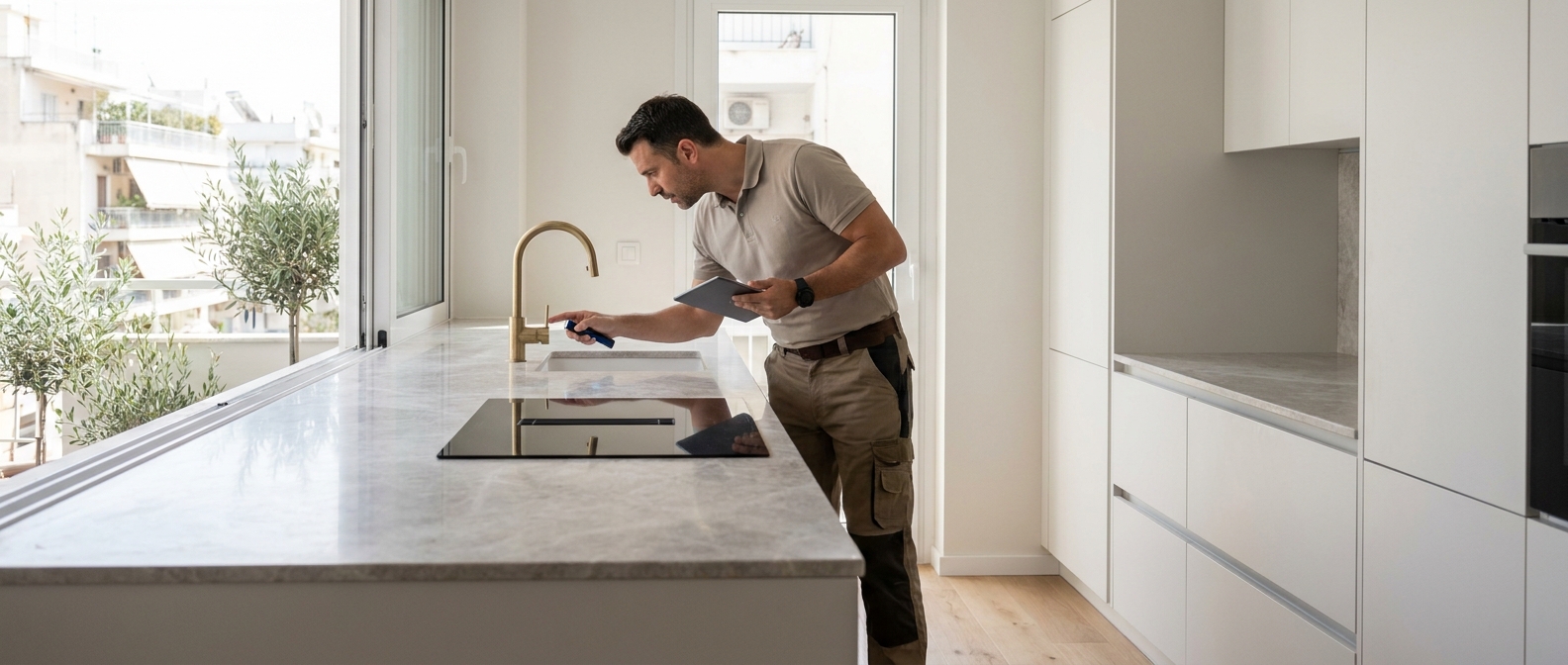
Inspecting the kitchen and bathrooms requires a strict focus on water pressure, drainage speed, and hidden moisture behind tiles or under cabinets. These are the most expensive rooms to renovate, making their inspection a critical part of your checklist.
Turn on all taps to check the water pressure and ensure the water runs clear, as old galvanised pipes often produce rust. Look under the kitchen sink and bathroom vanity for signs of active leaks or historic water damage. In the bathroom, check the ventilation; many interior bathrooms in Athens rely on a fotagogos (internal light/air shaft) which must be clear of debris. In older properties, have an engineer or qualified plumber assess the pipework before assuming it needs replacing; where old galvanised pipes are corroded, replacing them with modern PEX piping is a common upgrade.
🚀 Expert Insight
When inspecting bathrooms in older Athenian apartments, pay close attention to the “patari” (the loft space above the bathroom). This space often houses the water heater and old plumbing junctions. A quick inspection of this hidden area can reveal slow leaks that threaten to damage the ceiling and the apartment below yours.
Why Are Balconies and Awnings Critical in Athens?
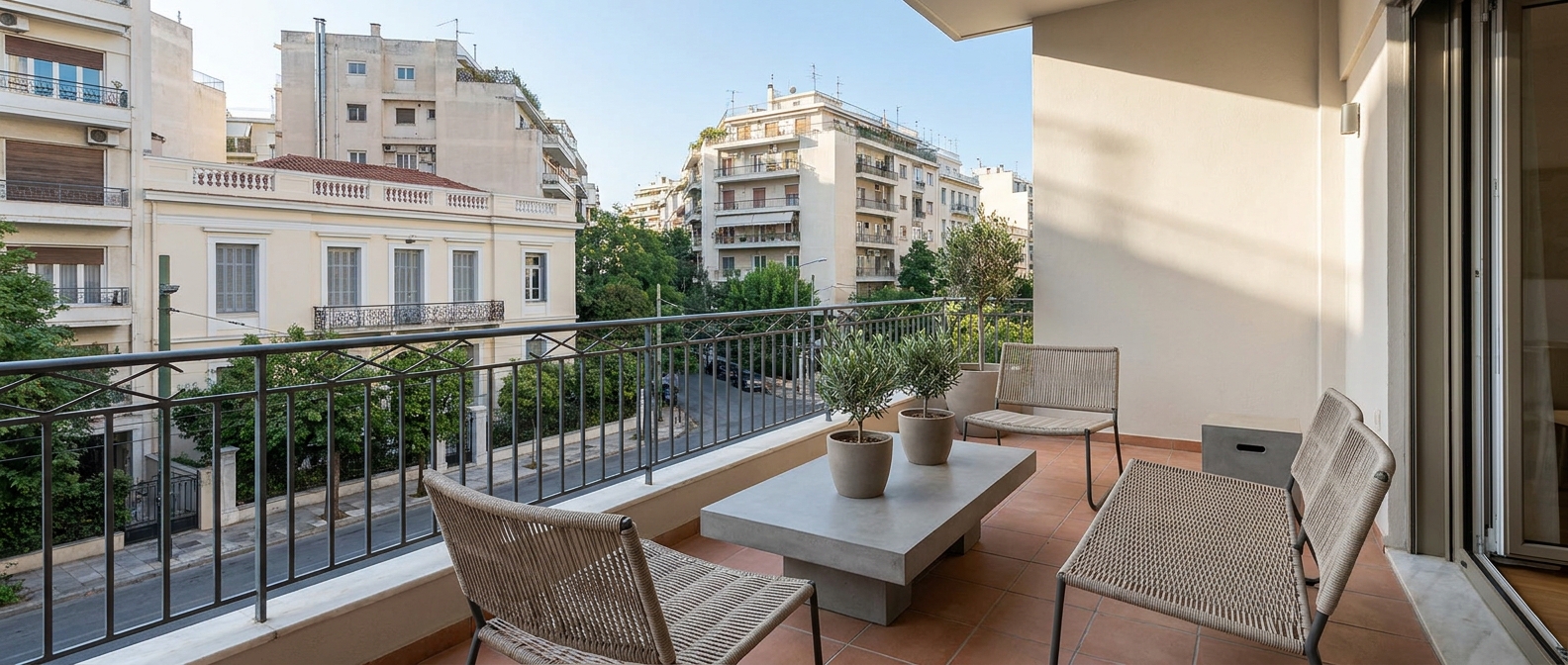
Balconies and awnings are critical because Athenians treat outdoor spaces as extensions of their living rooms for more than half the year. You must inspect the structural integrity of the balcony slab, the condition of the railings, and the functionality of the sunshades (tentes).
Check the balcony floor for cracked tiles or pooling water, which indicates poor drainage that could lead to moisture penetrating the apartment below. The metal railings should be secure and free of severe rust. Additionally, inspect the canvas awnings; the Mediterranean sun degrades fabric over time, and replacing a full set of custom awnings can be a surprising hidden cost for foreign buyers.
Physical vs. Legal Inspection Checklist
To help you organise your due diligence, we have compiled a comparison table outlining the distinct differences between the physical and legal checks required when purchasing property in Greece.
| Inspection Category | Physical Property Check (Engineer/Buyer) | Legal & Administrative Check (Lawyer/Notary) |
|---|---|---|
| Structural Integrity | Check walls for cracks, dampness, and floor levelling. | Verify the Electronic Building ID matches the physical layout. |
| Utilities & Systems | Test water pressure, electrical panels, and heating units. | Confirm the Energy Performance Certificate (EPC) is valid. |
| Outdoor Spaces | Inspect balcony drainage, railings, and awning condition. | Ensure all enclosed balconies are legally regularised and fines paid. |
| Building Health | Evaluate roof condition, elevator noise, and common areas. | Review kinochrista records for unpaid communal debts. |
| Ownership Status | Confirm the seller has physical possession and keys. | Conduct a Title Deed search at the Hellenic Cadastre for liens/mortgages. |
What Building-Level Checks Are Essential Before Buying?
Beyond the apartment walls, you must inspect the building’s roof, elevator maintenance history, and central heating system. The overall health of the polykatoikia directly impacts your property’s value and your daily quality of life.
When evaluating Greece golden visa properties, international investors often overlook the communal areas. However, under Greek law, you will generally be responsible for a share of common building expenses and major works, based on your apartment’s ownership percentage in the building (its “per-mille” shares, or chiliosta, set out in the building regulations). If the building requires a new roof or a complete elevator replacement shortly after your purchase, you will have to contribute your share of that cost too.
How to Evaluate the Heating System and Elevator?
You must determine if the apartment relies on an outdated central oil heating system or if it has been upgraded to autonomous natural gas or heat pumps. Simultaneously, ask the building manager about the elevator’s maintenance contract, its latest periodic inspection, and whether any upgrades or compliance works are pending.
Many older buildings in Athens have abandoned their central oil heating systems due to disputes over shared costs. If the apartment you are viewing is still tied to a defunct central system, you will need to install an autonomous natural gas boiler or a multi-split air conditioning system. Regarding the elevator, listen for unusual noises during operation and check the cabin for the maintenance company’s monthly sign-off sheet. A poorly maintained elevator is a major red flag for the building’s overall management.
🚀 Expert Insight
If you are buying a top-floor apartment or penthouse, gaining access to the communal roof (taratsa) is vital. Inspect the waterproofing membrane (monosi). If it is cracked or peeling, water will inevitably seep into your ceiling during the heavy Athenian winter rains. Negotiate roof repairs before finalising the purchase.
What Are the Costs of Buying an Apartment in Athens?
On top of the purchase price, buyers should budget for taxes, fees and professional costs, which together typically add around 7–11% to the price, before any renovation. The main items are summarised below; exact amounts depend on the property and should be confirmed with your lawyer and notary.
| Cost | Typical amount (2026) | Notes |
|---|---|---|
| Property transfer tax | 3.09% | 3% tax plus a 3% municipal surcharge on the tax, paid by the buyer on the higher of the agreed price and the property’s objective (tax) value. New-build properties sold under the VAT regime follow different rules. |
| Notary fees | approx. 0.65–0.8% + VAT | Scaled to the property value, plus copies and administrative charges. |
| Land Registry / Cadastre registration | approx. 0.5% | Registration of your title in the Hellenic Cadastre (or the local Land Registry). |
| Lawyer’s fees | approx. 0.5–1% + VAT | Not mandatory, but strongly recommended for foreign buyers to carry out the title search and review the contracts. |
| Engineer’s inspection | Fixed fee | Depends on the scope of the technical and planning checks. |
| Buyer’s agent fee | 2% + VAT | The standard market commission, where an agent is used. |
| Mortgage costs | Varies | Bank valuation, loan arrangement and mortgage registration fees, if you finance the purchase. |
⚠️ Important for non-EU buyers
In September 2026 the Greek government announced that, from 1 July 2027, the property transfer tax on residential property bought by non-EU/EEA citizens will rise from 3% to 15% (around 15.45% including the municipal surcharge). As announced, the increase applies to individuals only; companies, EU/EEA citizens, long-term residents and people of Greek descent are excluded, and commercial property and land stay at the current rate. At the time of writing, the measure has not yet been legislated, and it is still unclear how it will treat some Golden Visa routes, such as commercial-to-residential conversions. If you are a non-EU buyer, completing your purchase before 1 July 2027 may save you a substantial amount, so check the latest position with your lawyer and plan your timeline accordingly.
Most transfers are now processed electronically through the gov.gr property transfer platform, where the notary assembles the required tax, planning and ownership documents into a single digital file before the final contract is signed.
Whether you are looking at houses for sale in Greece, exploring Greek hotels for sale, or seeking luxury Corfu properties for sale, the principles of strict due diligence remain the same. Atalos Estate is dedicated to ensuring your investment is secure, profitable, and legally sound.
Ready to find your perfect Athenian property without the stress of hidden surprises? Submit a Property Request today, and let our expert buyer’s agents handle the heavy lifting. If you have specific questions about the inspection process, Contact Our Team to schedule a private consultation.
FAQ — Frequently Asked Questions
What is the most important legal document when buying an apartment in Athens?
The most critical documents are a clean title (verified at the Land Registry or Hellenic Cadastre) and the planning-compliance paperwork: the engineer’s certificate on unauthorised constructions and the Electronic Building ID, both issued through the Technical Chamber of Greece (TEE) platform. Together they confirm that the apartment matches its approved plans. If they are missing or inaccurate, the notary cannot complete the transfer.
Do I need a structural engineer to inspect an apartment in Greece?
Yes, hiring a civil or structural engineer is highly recommended for any property purchase in Greece. While your lawyer handles the legal title, an engineer will verify the structural integrity, check for illegal extensions, and assess the condition of the plumbing and electrical systems. Their report is vital for your buying checklist.
What are “kinochrista” and why do they matter?
Kinochrista are the monthly shared communal expenses paid by all apartment owners in a Greek building. They cover elevator maintenance, cleaning, communal electricity, and sometimes central heating. Reviewing these records ensures the building is financially healthy and that the previous owner has no outstanding debts.
Can I buy an apartment in Athens if it has illegal extensions?
You cannot legally purchase an apartment with active, unregularised illegal extensions. The current owner must first declare these irregularities under Greek law and pay the associated state fines to legalise the space. Only after the engineer issues a clean certificate can the sale proceed.
How much should I budget for renovating an older Athens apartment?
Renovation costs vary significantly depending on the apartment’s condition, the scope of works and the quality of materials. Older apartments often need upgraded plumbing and electrics, new window frames and a modern heating or cooling system. Obtain a detailed contractor’s estimate, ideally after your engineer’s inspection, before committing to a purchase.